
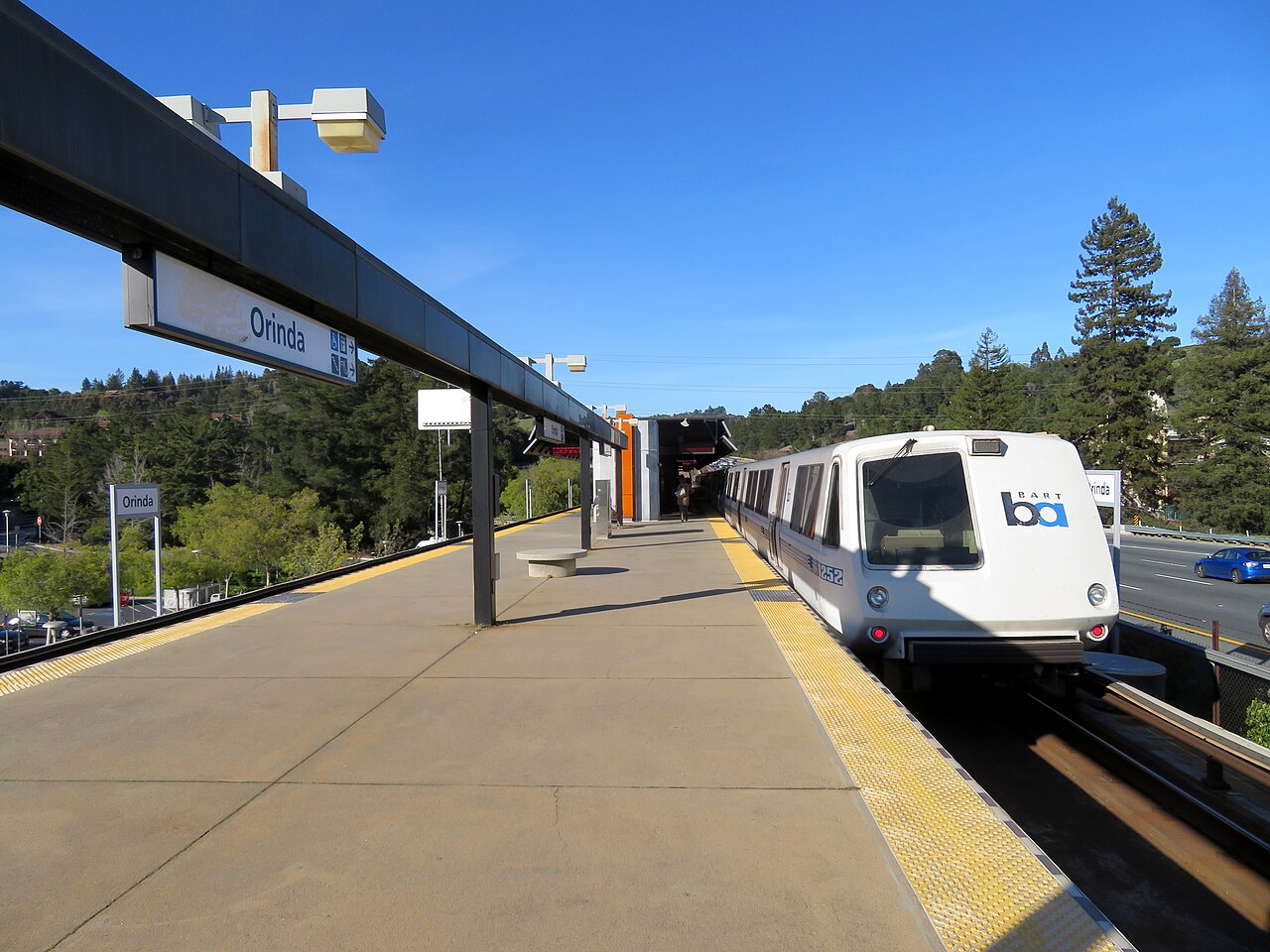
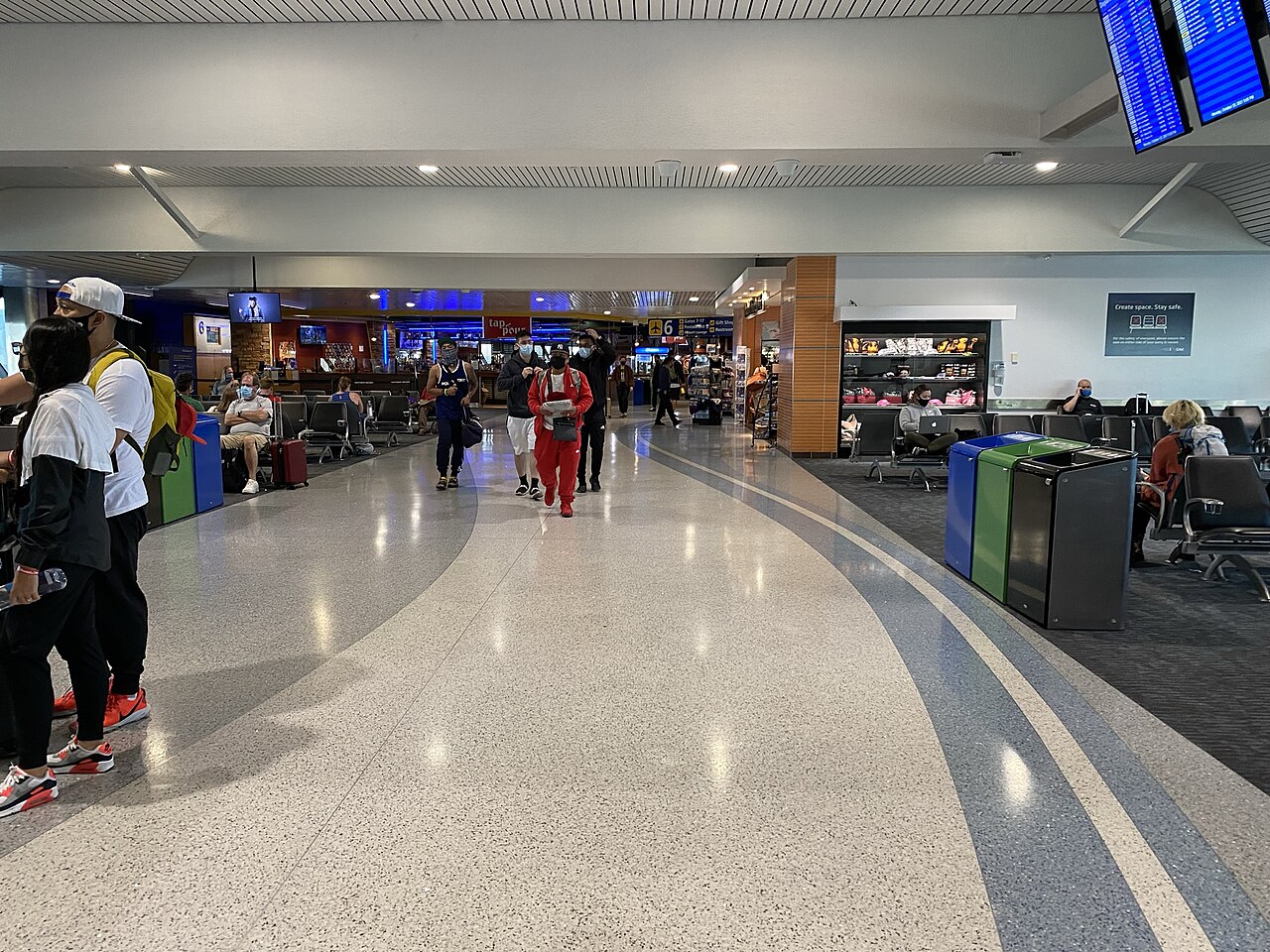
At Oakland's airport and at Target, nobody has to take me anywhere anymore — an Access Offer does the guiding, and the business pays for the call. Now BART is testing the same idea for any part of a journey, through January 3, 2027. Whether it becomes permanent depends on whether we ride.
The airport, on my own
I travel through Oakland International Airport often enough that the place has a rhythm for me. What it no longer has is the pause at the door — the moment of finding an employee, waiting for someone to be free, and being walked where I need to go by a person whose shift, route, and pace are not mine.
Here is how it goes now. I open the Aira Explorer app on my iPhone — the app connects blind and low-vision users to live, professionally trained visual interpreters through the phone's camera — and within seconds an agent is in my ear. We walk together: me with my cane and my phone up, them reading the terminal for me. Straight to my airline's counter, efficiently, the way a sighted passenger follows the signs. It is not a special trip. It is every trip. I use Aira at OAK every time I am there — to find the restrooms without hunting for someone to ask, to navigate to a restaurant and pick up a meal before a flight. Nobody's favor. Nobody's schedule. I just travel.
Same errand, different building
Target used to mean shopper support: find an employee, explain what I came for, and shop at the pace of whoever could be spared. That need is gone. When I get to a Target store, the store's Access Offer is usually already waiting — offers tied to a single place switch on by themselves when you arrive, because the place knows where it is. If it hasn't switched on, I open the app and activate it. Then I shop.
An interpreter guides me through the store working from two things at once: the signage hanging over the aisles, seen through my phone's camera, and the store's own map online. We find what I came for. When I am done, the same voice talks me to the checkout lanes I could not have located alone. One trip, the staffed lines were long and self-checkout was the fastest option available, so I used it — an interpreter narrating the screen, me scanning and bagging. Cumbersome? Honestly, yes. Doable? Completely. And the whole interaction was mine: my cart, my pace, my call. I did not wait for help. I did not need any.

Access that someone decided to pay for
Those two stories have the same engine, and it is worth naming plainly. Aira is a paid service. The interpreters are trained professionals, and their time is billed by the minute. At OAK and at Target, I do not pay for those calls — the airport and the store do, because both joined Aira as Access Partners and decided that a blind customer's independence is part of the service they sell.
They are not unusual, and they are not experimenting anymore. Starbucks, Bank of America, TD Bank, Wegmans, and Meijer carry Access Offers in their U.S. locations; airports from Los Angeles and San Diego to Sacramento do the same; the partner list runs to more than 270 organizations — universities, museums, government agencies, employers. [3] [5] At OAK, the airport lists Aira on its own accessibility page as available to blind and low-vision passengers free of charge, anywhere on airport property. [4] These offers renewed, expanded, and settled into ordinary life. That is what success looks like from the inside: you stop noticing the access, because it simply works every time.
Then came BART
Blind riders have asked BART to become an Access Partner for years — not as a favor, and not as a gadget. A tool. The alternative was BART trying to engineer its way to the same result on its own: working through regional coordination with the Metropolitan Transportation Commission and the connecting transit agencies a single BART journey touches, fixing access one handoff at a time. But a rider's trip does not respect agency boundaries. A fix that ends at the fare gates is not a fix.
On October 6, 2026, BART launched a pilot. Through January 3, 2027, BART's Access Offer covers the cost of Aira calls for BART-related trips — BART's first step toward deciding whether this belongs in the system permanently. [1]
An offer built like a journey, not a building
The BART offer works differently from the Target one, and the difference is the whole design. A store is a place, so its offer can switch on when you arrive. A trip is not a place — it starts at your front door and ends wherever you are actually going. So there is no geofence waiting for you at the station entrance — the offer won't switch on by itself, because the agent needs to know you are actually traveling with BART. Before you travel, you open the app's Browse Access Offers, select BART, and the offer applies to your next call — or you connect first and ask the agent to activate it for you.
And because it is built for a journey, the coverage is any part of the journey. As long as BART is one leg of the trip you are making, the offer covers the part in front of you: the walk or ride to the station, the entrance, the fare gates and ticket machines riders told BART were the hardest part to find, the right platform, the right train — and the streets at the other end, all the way to your destination. The interpreters working these calls receive basic training on the BART system itself, with BART's website and app at hand to answer from. [1] [2]
One thing to be precise about: Aira is a paid service, and an Access Offer is how a business chooses to cover that cost for its own people — the airport at OAK, the store at Target, BART for its riders during this pilot. Using one asks nothing of you: no subscription, not even a paid account. That is why the model can last: somebody with a budget looked at the cost and judged the access worth buying.
January 3 is a verdict, not a deadline
BART has been honest about what happens next, and riders should be just as honest back. When the pilot ends, the agency will review the usage data and rider feedback and decide whether to seek funding to continue the service. [1] [2] A pilot is a question an agency asks in public, with its wallet open. Every call placed under the offer is an answer. Every week the offer sits unused is also an answer — the wrong kind.
This is how access actually gets built. Not all at once, and not by announcement — one organization at a time deciding the investment is worthwhile, and then being shown, in numbers it cannot argue with, that it was. OAK was shown. Target was shown. For the next ten weeks, BART is watching.
So here is the ask, from one rider to others. If you are blind or have low vision and you ride BART, take one trip with the offer before January 3 — a route you already know, so you can feel the difference for yourself. Then tell BART what it was worth, because feedback is the other half of the evidence. If enough of us ride, January 3 stops being an ending and becomes the day the pilot turned into a fixture — as ordinary, and as permanent, as the offer waiting for me at the airport and the store.
The technology in this story is not new. What is new is whose journey it covers. At the airport, I walk in like any other passenger. At Target, I shop like any other customer. This fall, on BART, we can travel like any other rider — with support we direct, on trips we choose. Use it like you mean to keep it.
Sources
Sources checked October 20, 2026. Fernando's experiences at OAK and Target are his own, as told to Elevate Access Solutions.
- BART. “BART launches pilot of Aira video interpreter service to help blind and low vision riders navigate the system.” October 6, 2026. Pilot dates, door-to-door coverage, Browse Access Offers activation, interpreter training on the BART system, and the commitment to review usage data and rider feedback.
- Mass Transit Magazine. “BART, Riverside Transit Agency launch new digital tools to improve transit accessibility.” October 2026. Confirms the pilot runs through January 3, 2027, that Aira normally charges by the minute while BART covers BART-trip calls during the pilot, and that continuation depends on evaluation of usage and feedback.
- Aira. Access Partners listing, Aira Newsroom. U.S.-wide partners include Bank of America, Meijer, Starbucks, Target, TD Bank, and Wegmans; California partners include Los Angeles International Airport, Sacramento International Airport, and the San Diego County Regional Airport Authority.
- Oakland San Francisco Bay Airport (OAK). “Accessibility.” Aira visual interpreting is available to blind and low-vision passengers free of charge anywhere on airport property.
- TravelAbility Insider. “Innovation of the Month: Aira.” April 30, 2025. Aira partners with more than 270 organizations, including Target, Bank of America, and Starbucks, plus airports, universities, museums, and government agencies.